
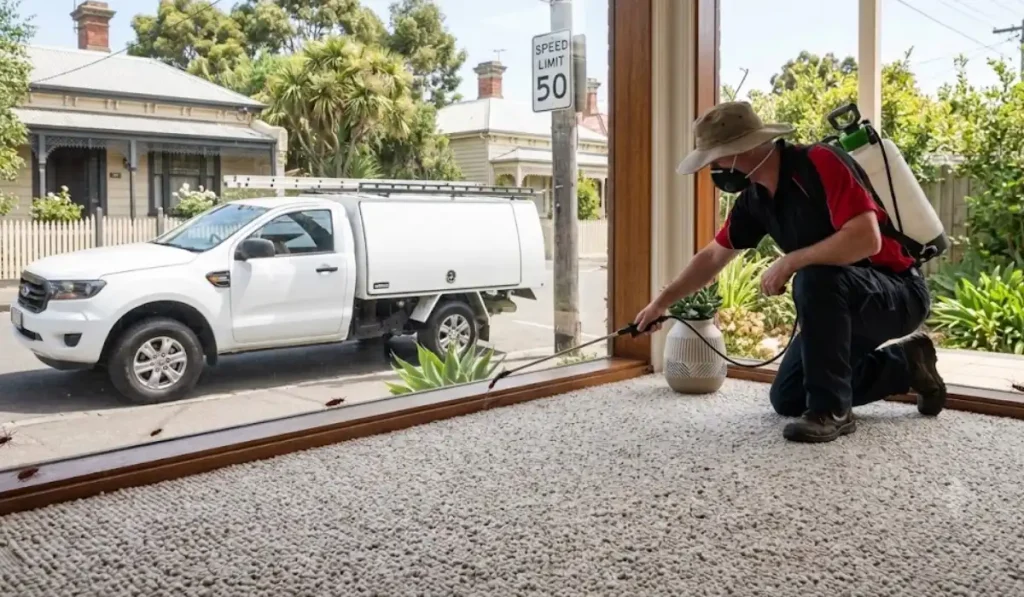
One of the first questions Melbourne homeowners ask when they spot a pest problem is: what is this going to cost? It is a reasonable question, and the honest answer is that pest control pricing varies quite a bit depending on several factors. The type of pest, the scale of the infestation, and the nature of the treatment required all play a role in how a job is quoted.
This guide explains what actually drives pest control pricing in Melbourne – what makes some jobs more involved than others, why quotes differ between providers, and how to approach getting a quote that reflects your actual situation. For a broader look at service pricing across Australia, see our overview of pest control costs in Australia.
Why Pest Control Pricing Varies
Pest control is not a one-size-fits-all service. A quick treatment for a minor ant problem in a small apartment is a very different job from a termite inspection and barrier installation on a large property with a subfloor. Providers quote based on the specifics of each job, which means any figure you see online is a starting point at best.
The main variables that shape a quote are the type of pest, how established the infestation is, the size and layout of the property, the treatment method required, and whether the service is a single visit or part of an ongoing plan. Understanding these helps you read quotes more clearly and ask the right questions before you book.
What Affects Pest Control Costs in Melbourne
Type of Pest
The pest itself has the biggest bearing on how a job is quoted. General pests – ants, cockroaches, spiders, silverfish – are typically manageable with a standard spray treatment and a single visit. Specialist pests require a different level of work entirely.
Termites require a thorough inspection before any treatment decision can be made, followed by a method – chemical barrier or baiting system – that involves considerable time, specialised materials, and in most cases ongoing monitoring. Bed bugs require meticulous room-by-room inspection and targeted application across mattresses, bed frames, furniture, and skirting boards. Rodents often need a combination of baiting, trapping, and proofing advice, with follow-up visits to check stations and clear deceased animals from roof voids. Each pest type has its own scope, and that scope drives the quote. For a guide to the pests most commonly treated in Melbourne homes, see our post on the most common household pests in Australia.
Severity and Extent of the Infestation
An infestation caught early is simpler and quicker to resolve than one that has been active for weeks or months. Once a colony is established, it occupies more of the property, may have spread to secondary areas, and requires more product and more time to address thoroughly.
This is one of the practical reasons to act at the first sign of a problem rather than waiting to see whether it resolves on its own – it rarely does, and the job becomes more involved the longer it continues. Our guide on signs you need professional pest control can help you identify when it is time to call.
Size and Layout of the Property
Larger properties take longer to inspect and treat. More product is needed, and more areas need to be accessed – including roof voids, subfloor spaces, wall cavities, and the perimeter. Most providers factor property size into their quotes, so a compact one-bedroom unit and a four-bedroom house on a large block are unlikely to attract the same rate for the same pest.
Layout also matters. Properties with dense vegetation against the building, narrow or obstructed subfloors, or complex roof structures take longer to treat thoroughly, and this is reflected in how the job is scoped.
Treatment Method Required
Different pests – and different severities of the same pest – call for different treatment approaches. A cockroach problem in a kitchen may be resolved with gel bait and a targeted spray. A termite infestation requires either a full soil chemical barrier around the property’s perimeter or an ongoing baiting system with monitoring stations. Heat treatment for bed bugs is more involved than a standard chemical application but may be the appropriate approach for a severe case.
The method drives both the time on-site and the materials used, which together shape the final quote. Homeowners interested in lower-chemical approaches can also explore what is available – our post on whether eco-friendly pest control is effective covers this in more detail.
One-Off vs Regular Service
A single treatment and an ongoing service plan are quoted differently. Regular plans – quarterly or bi-annual visits – typically offer a lower per-visit rate than one-off bookings, and they provide the added benefit of catching new pest activity before it becomes an established infestation requiring more intensive work.
For properties in areas with consistent pest pressure, or homes with timber frames where termite risk is ongoing, a regular plan often makes practical and financial sense over time. Our guide to cost-effective quarterly pest control explains what that looks like in practice.
What Each Service Type Involves
Understanding what each service type actually entails helps you assess whether a quote is realistic and what you are getting for your money.
General Pest Control
A standard general pest treatment covers common household pests – ants, cockroaches, spiders, and similar insects. It typically includes an inspection of the property, treatment of active areas, and application of product in key harbourage zones: the kitchen, bathrooms, roof void, and external perimeter. For most homes this is a single visit, with a follow-up recommended if activity continues. See our guides on getting rid of cockroaches and getting rid of ants in Australia for more on what these treatments involve.
Termite Inspection and Treatment
Termite work is quoted and conducted separately from general pest control because it is a fundamentally different scope of service. An inspection uses moisture detection, thermal imaging, and physical checks of the subfloor, roof void, and perimeter to identify active termite activity or structural risk. Treatment – whether a chemical soil barrier or a baiting system – is then planned based on those findings.
Baiting systems require ongoing monitoring visits to check station activity and replenish bait as needed. Both methods require skilled application to be effective. The cost of professional termite treatment is almost always far lower than the structural repair bills that follow an untreated infestation – a point worth keeping in mind when weighing up the investment. For further detail, see our full guide on how to get rid of termites in Australia.
Rodent Control
Rat and mouse treatment generally involves a combination of baiting stations, trapping, and identification of entry points to prevent re-entry. Roof voids, subfloor spaces, and wall cavities are the most common harbourage areas in Melbourne homes and all require targeted attention. Follow-up visits are usually recommended to check stations and remove any deceased rodents, which if left in place can create secondary odour and hygiene problems. Our guide on getting rid of rats in the roof covers the specifics in detail.
Bed Bug Treatment
Bed bug treatment is one of the more labour-intensive residential pest control services. A thorough treatment requires careful inspection of mattresses, bed frames, furniture, skirting boards, electrical outlets, and any cracks or crevices where bed bugs can harbour. The treatment itself – whether chemical application, heat treatment, or a combination – must reach all life stages including eggs, which are resistant to many standard products. Follow-up visits are typically part of a proper treatment programme. See our guide on how to get rid of bed bugs for a full breakdown.
Pre-Purchase Pest Inspections
A pre-purchase inspection assesses a property for active pest activity and pest-related damage before settlement. It typically covers the full property – subfloor, roof void, perimeter, and accessible internal areas – and produces a written report. This is a separate service from a treatment and is quoted accordingly. Given the potential cost of discovering a significant pest problem after purchase, it is a practical inclusion in any property due diligence process.
Is Professional Pest Control Worth the Investment?
For most pest problems, yes. The case for professional treatment rests on what DIY approaches typically miss. Supermarket sprays and store-bought traps address visible pest activity but rarely reach the source – colonies, nests, and larvae hidden in wall cavities, roof voids, and subfloor spaces. Without reaching the source, surface treatments provide only temporary relief and the infestation typically returns.
A professional treatment targets harbourage areas, covers multiple life stages of the pest, and usually includes aftercare guidance to reduce the risk of reinfestation. For a side-by-side look at what each approach actually delivers, see our guide on DIY vs professional pest control. For families with concerns about treatment safety around children and pets, our post on whether pest control is safe for pets and kids addresses the most common questions.
Tips for Getting an Accurate Quote
The more clearly you can describe your situation, the more accurate and useful your quote will be. Keep the following in mind when contacting a pest control provider.
- Name the pest if you can: The more specific you are – pest type, where you have seen activity, and for how long – the more targeted the quote will be. If you are unsure, describe what you have seen and let the provider advise.
- Describe the property: Number of bedrooms, whether there is a subfloor or roof void, and approximate property size all help a provider estimate the scope of work before they arrive.
- Ask what is included: Some quotes cover a single visit; others include a follow-up inspection or ongoing monitoring. Clarify this upfront so you can compare quotes on equal terms.
- Ask about regular service options: If you are likely to need treatment again in six to twelve months, an ongoing service plan may be more economical than repeated one-off bookings.
- Be cautious of unusually low quotes: A quote that seems very low relative to others may reflect a more limited scope of treatment. A thorough job that resolves the problem properly is generally more economical over time than multiple partial treatments.
Why Choose True Pest Control?
At True Pest Control, we provide clear, upfront quotes based on the specifics of your property and pest problem – no vague estimates, no surprise additions on the day. Our focus is on quality work that resolves the issue properly the first time, so you are not left with a recurring problem that requires repeated visits.
- Transparent, upfront quotes – you know the full scope before we start
- Experienced professionals who conduct a thorough inspection before recommending any treatment
- Appropriate methods selected for the pest and property – not a generic approach applied to every job
- Clear aftercare guidance to reduce the risk of reinfestation
- Regular service plans available for properties requiring ongoing protection
- Customer-focused service across Melbourne and surrounding suburbs
Conclusion
Pest control pricing in Melbourne is shaped by the type of pest, the severity of the infestation, the size of the property, and the treatment method required. General pest treatments are typically straightforward single-visit jobs, while specialist services such as termite treatment or bed bug removal involve more time, more targeted methods, and often follow-up visits. Acting early – before a problem becomes established – almost always means a simpler and more manageable treatment. If you are unsure what you are dealing with, an inspection is the right starting point and gives you a clear picture before any commitment is made.
Contact True Pest Control today for a prompt, no-obligation quote. We service Melbourne and surrounding areas and are happy to discuss your situation before you book.
Frequently Asked Questions
Ques 1: What is the biggest factor affecting pest control pricing in Melbourne?
Ans. The type of pest is the single biggest factor. General pests such as ants, cockroaches, and spiders require less specialised work than termites, bed bugs, or rodents – which involve more targeted products, longer treatment times, and often follow-up visits. The severity and extent of the infestation also plays a significant role.
Ques 2: Does property size affect how much pest control costs?
Ans. Yes. Larger properties take more time to inspect and treat thoroughly, and require more product. Most pest control providers factor property size into their quotes, so a compact apartment and a large family home will not attract the same rate for the same pest.
Ques 3: Is pest control more affordable with a regular service plan?
Ans. Generally, yes. Regular service plans – such as quarterly or bi-annual treatments – typically offer a lower rate per visit compared to one-off bookings. They also help catch pest activity early, before it becomes an established infestation that requires more intensive treatment.
Ques 4: Why is termite treatment quoted separately from general pest control?
Ans. Termite treatment involves specialist methods – chemical soil barriers, baiting systems, and ongoing monitoring – that are distinct from standard general pest control. The scope of the work, the products involved, and the time required are considerably greater, which is reflected in how it is quoted.
Ques 5: Why do some pest control quotes vary so much between providers?
Ans. Quotes vary because providers differ in what they include – some cover a single visit while others include follow-up inspections, aftercare, or ongoing monitoring. The treatment method, quality of products used, and thoroughness of the inspection also affect the quote. A lower quote does not always reflect better value if it covers less of the job.
Ques 6: How do I know if I need a one-off treatment or ongoing pest control?
Ans. A one-off treatment works well for isolated, low-severity infestations. Ongoing pest control is more suitable for properties that experience recurring pest activity, homes in areas with high pest pressure, or situations where early detection is important – such as properties with timber frames at risk of termite damage.
Ques 7: Is professional pest control worth the investment?
Ans. For most infestations, yes. DIY products typically address the pests you can see but rarely reach the source – nests, colonies, and larvae hidden in wall cavities, roof voids, and subfloor spaces. A professional treatment targets the infestation at its source, which reduces the likelihood of reinfestation and is often more economical than repeated DIY attempts over time.