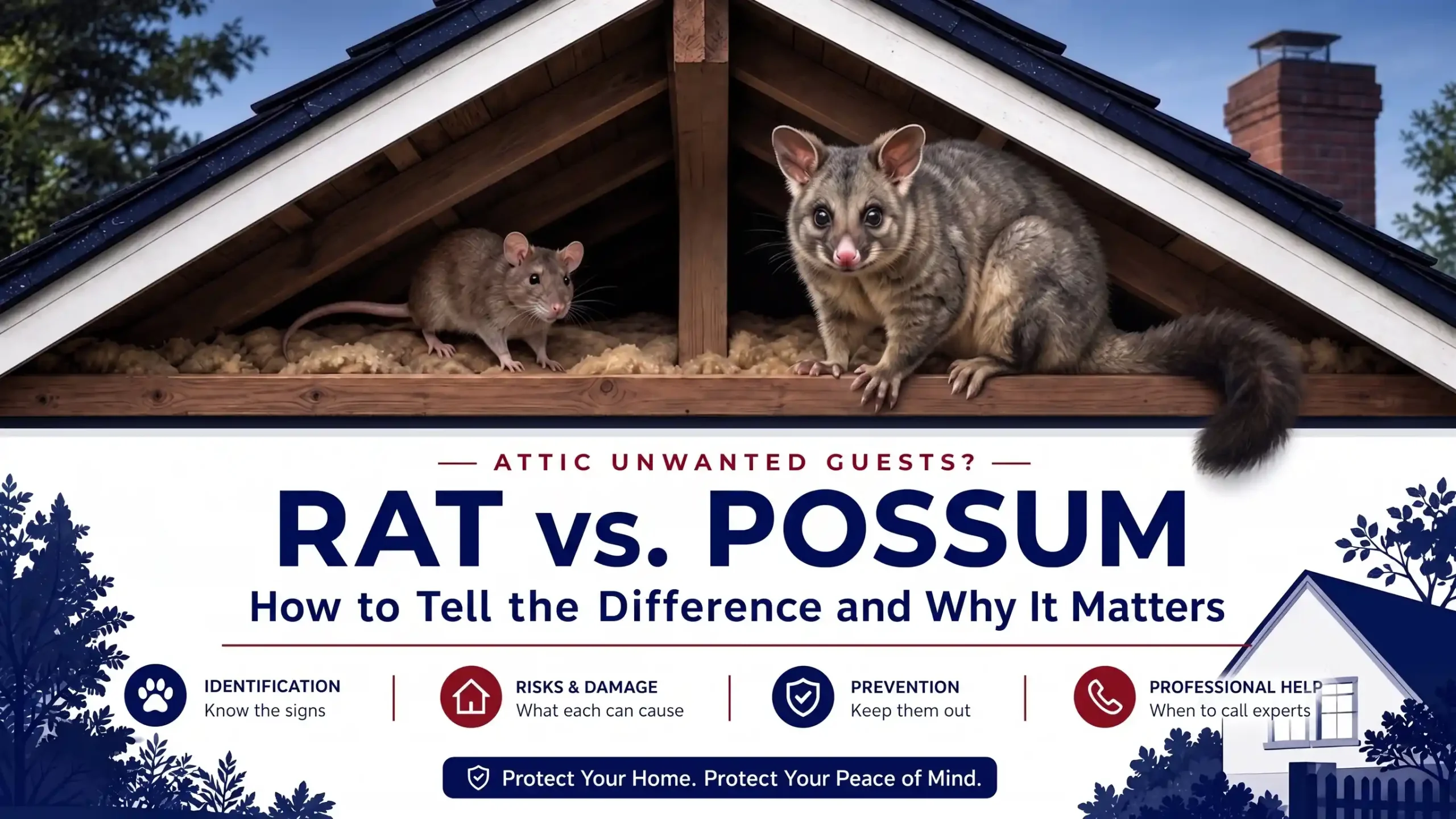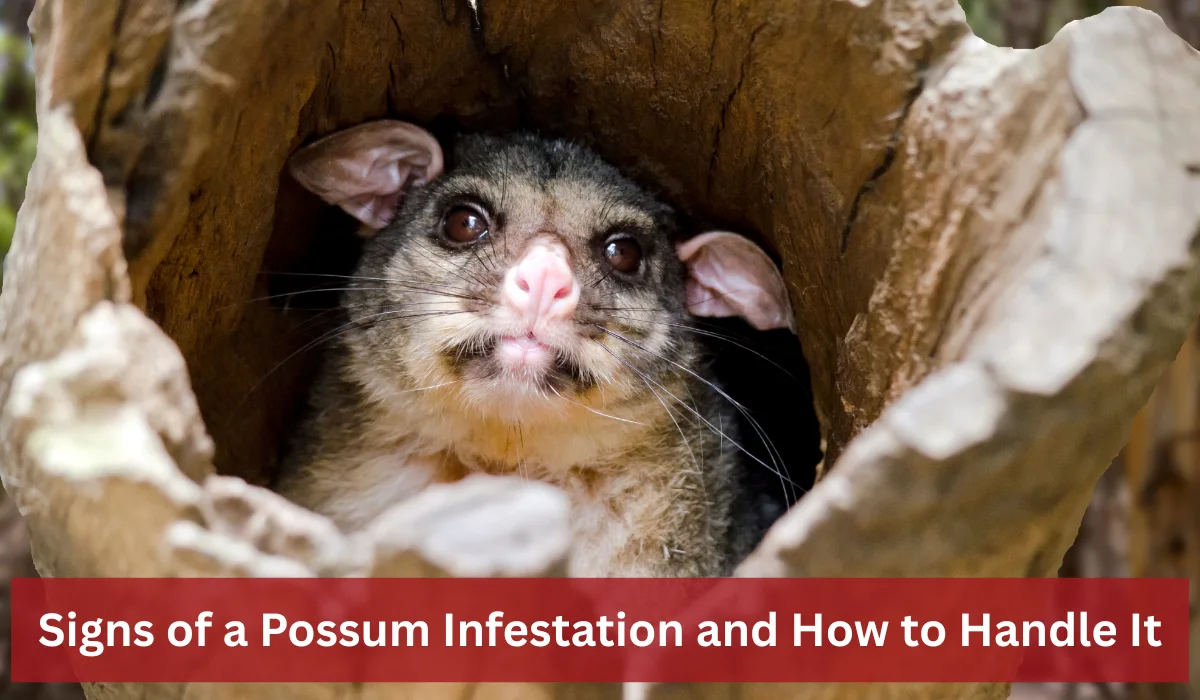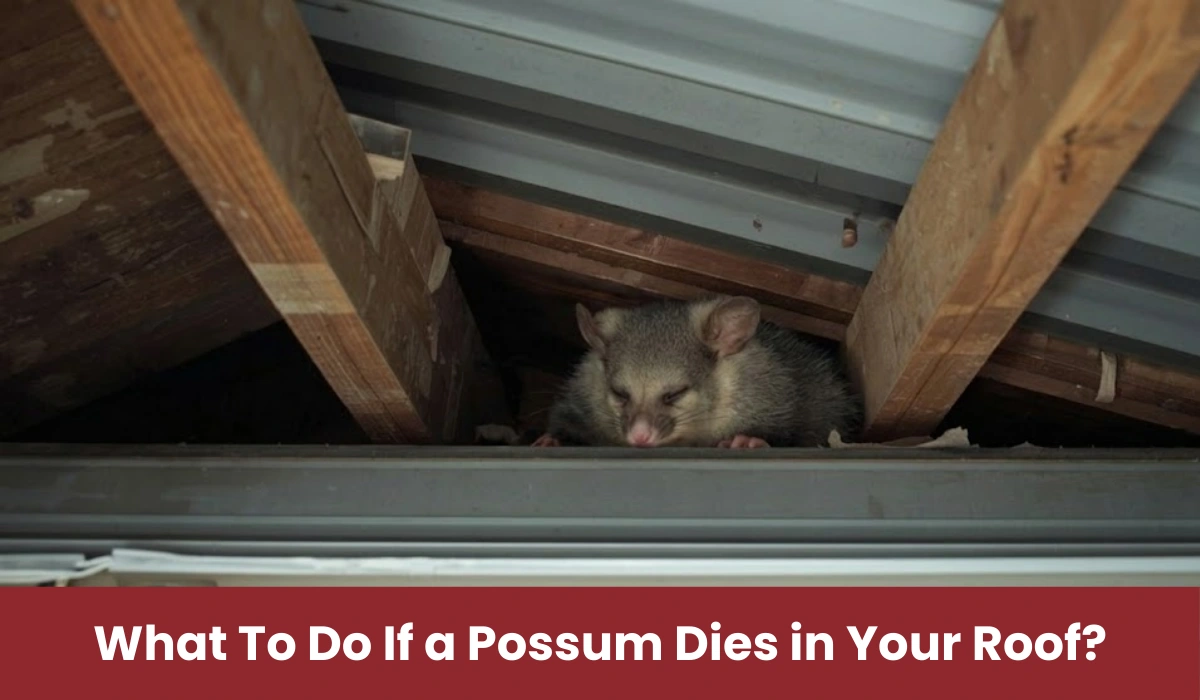

That distinction matters because it changes how you handle the problem. You can’t just bait or kill them. Under the Wildlife Act 1975 (VIC), the National Parks and Wildlife Act 1974 (NSW), and equivalent legislation in every Australian state, possums are protected native wildlife. Harming them even relocating them more than 50 metres from their territory is illegal without a permit.
So, let’s start with the most important question.
Possums are protected under state wildlife legislation across all of Australia. It is illegal to trap, harm, kill, or relocate a possum without a relevant licence. The only lawful method of “removal” is exclusion allowing the possum to leave at night through a one-way exit, then permanently sealing the entry point. Breaches can result in fines of up to $10,000 or more depending on the state.
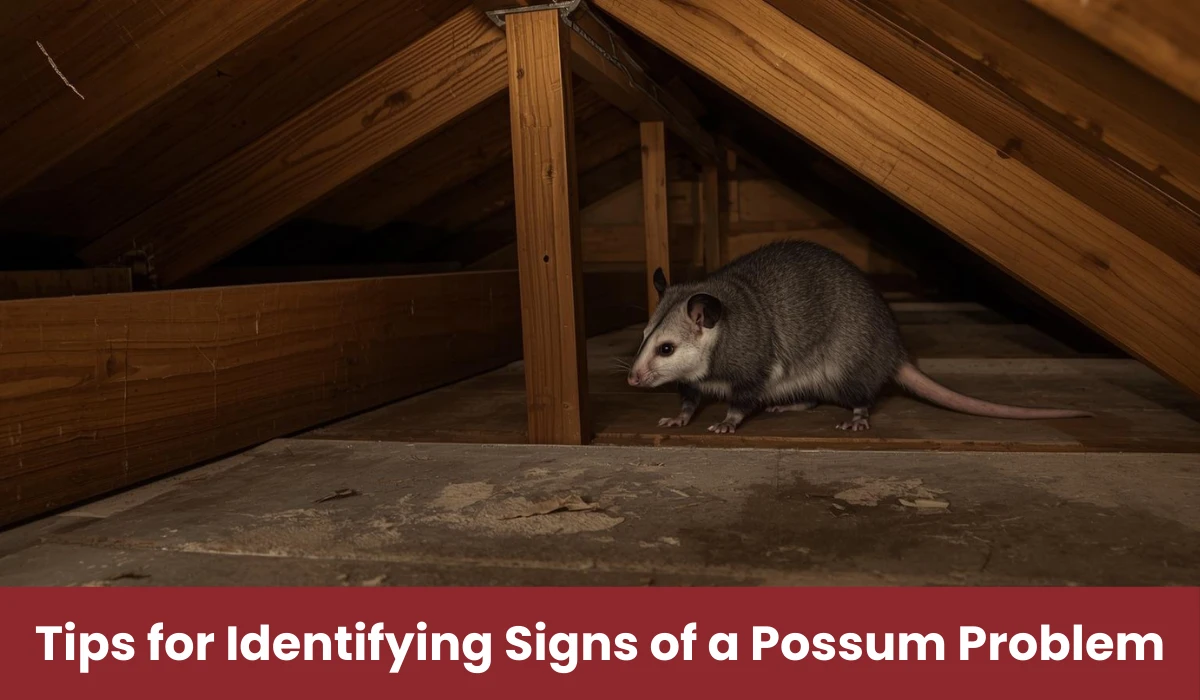
What Are the Signs of a Possum Infestation in Your Roof?
The word “infestation” is a bit dramatic for possums, but if you’ve got one living inside your roof cavity, the damage it causes is very real. Here are the 10 signs that tell you a possum has moved in not a rat, not a bird, but a possum.
Heavy Thumping Sounds at Night
Possums are active from dusk. The movement you hear is heavy and deliberate like something the size of a small cat walking across your ceiling. This is the single most consistent sign reported by Australian homeowners in Melbourne, Sydney and Brisbane.
Ammonia-Like or Musky Smell
Possum urine contains high levels of ammonia. Once they’re established in your roof, the smell can seep through ceiling plaster, especially in warm weather when the roof space heats up like an oven. It’s stronger than a rat smell think pungent and acrid, not just musty.
Large, Cylindrical Droppings
Possum droppings are 10–15mm long, dark brown to black, cylindrical and blunt at both ends. You’ll find them near entry points, on the roof frame, or around the insulation. This is one of the clearest ways to confirm you’re dealing with a possum rather than a rat. See our guide on what rat droppings look like for a comparison.
Greasy Rub Marks at Entry Points
Possums repeatedly use the same entry point usually a broken roof tile, a gap in the eaves, or a loose vent. Over time, the oils from their fur leave a dark, greasy smear around the opening. If you can see this mark, that’s almost certainly the spot they’re using to get in and out every night.
Chewed or Damaged Wires
Possums chew. Their incisors keep growing, so gnawing on cables and timber is normal behaviour. Chewed electrical wires in your roof cavity are a serious fire hazard the CFA (Country Fire Authority) has documented house fires where roof-dwelling animals chewed through cabling. Don’t ignore this one. If you suspect wire damage, call an electrician before a pest controller.
Torn or Displaced Insulation
Possums nest. They’ll shred glasswool or polyester insulation to build a warm sleeping area. Once the insulation is disturbed, it loses its thermal rating your energy bills go up, and you have a biologically contaminated material sitting above your living space.
Hissing, Growling or Clicking Sounds
Possums aren’t quiet animals. They have a distinct range of vocalisations a rasping hiss, a guttural growl, and sometimes a clicking call. If you hear this from your roof or garden at night, it’s a possum, not a rat. Rats don’t make calls that loud or that guttural.
Half-Eaten Fruit or Garden Damage
If you have fruit trees, veggie patches, or ornamental flowers and you’re finding half-eaten produce on the ground in the morning, a possum is doing overnight raids. This often starts outdoors before they move indoors. Lemon trees, citrus in general, passionfruit, and roses are particularly targeted.
Solar Panel or Roof Tile Displacement
Possums love the warm, sheltered gap under solar panels. Their activity can dislodge panel mounts and chew through wiring a problem that’s expensive to fix and not always covered by home insurance. If your energy generation has dropped and you can’t explain it, check under the panels.
Internet, Phone or TV Disruptions
Some homeowners only discover their possum problem because their internet or pay-TV cuts out. The communications wiring that runs through your roof space is just as chewable as power cabling. This is one of the lesser-known signs and it’s why possum issues can go undiagnosed for months.
Here’s something that trips up a lot of homeowners: possums almost always access your roof from the same spot every single night. Before you call anyone, go outside at dusk (around sunset) and watch your roofline from a distance. Within 20–30 minutes, you’ll likely see the possum emerge and head off to forage. That tells you exactly where the entry point is and it saves your pest controller hours of inspection time, which saves you money. Take a short video on your phone as evidence. The entry point is always the thing to fix, not the possum.
How Do You Tell a Possum Apart from a Rat in Your Roof?
This is the question I get most often. People hear something in their roof and immediately assume rats. But the two animals behave quite differently, and misidentifying them leads to the wrong treatment and wasted money.
| What You Notice | Possum | Rat / Mouse |
|---|---|---|
| Movement Sound | Heavy, slow thumps and footsteps like a small cat walking | Light, quick scurrying and scratching sounds |
| Active Hours | Primarily dusk to dawn; quieter after midnight | Active throughout the night, often frantic |
| Droppings Size | 10–15mm, cylindrical, blunt at both ends | 6–9mm (rat) / 3–5mm (mouse), pointed ends |
| Entry Point Size | Needs a gap of at least 7–10cm look for displaced tiles or open vents | Can squeeze through gaps as small as 2cm (mouse) or 5cm (rat) |
| Vocalisations | Hissing, growling, clicking quite audible to the human ear | High-pitched squeaking, mostly not audible |
| Smell | Strong ammonia / musky odour | Musty, stale urine smell less pungent than possum |
| Legal Status | Protected native wildlife cannot be killed or relocated | Pest species can be baited and trapped |
Why Do Possums Move Into Roofs? (The Actual Mechanics)
Most articles just tell you possums like “warmth and shelter.” That’s technically true but it doesn’t explain the full picture. Here’s what’s actually going on.
In the wild, possums den in tree hollows. The problem is that urban development has dramatically reduced the number of mature, hollow-bearing trees in Australian cities. According to the Department of Climate Change, Energy, the Environment and Water, tree hollow formation takes 100–300 years in native eucalypts far outpaced by the rate of urban tree clearing.
With fewer tree hollows available, possums substitute roof cavities. Your roof space offers everything a tree hollow does: it’s dark, dry, protected from predators, and maintains a stable temperature. Once a possum discovers your roof, it will return to that same den site every night unless you physically prevent access.
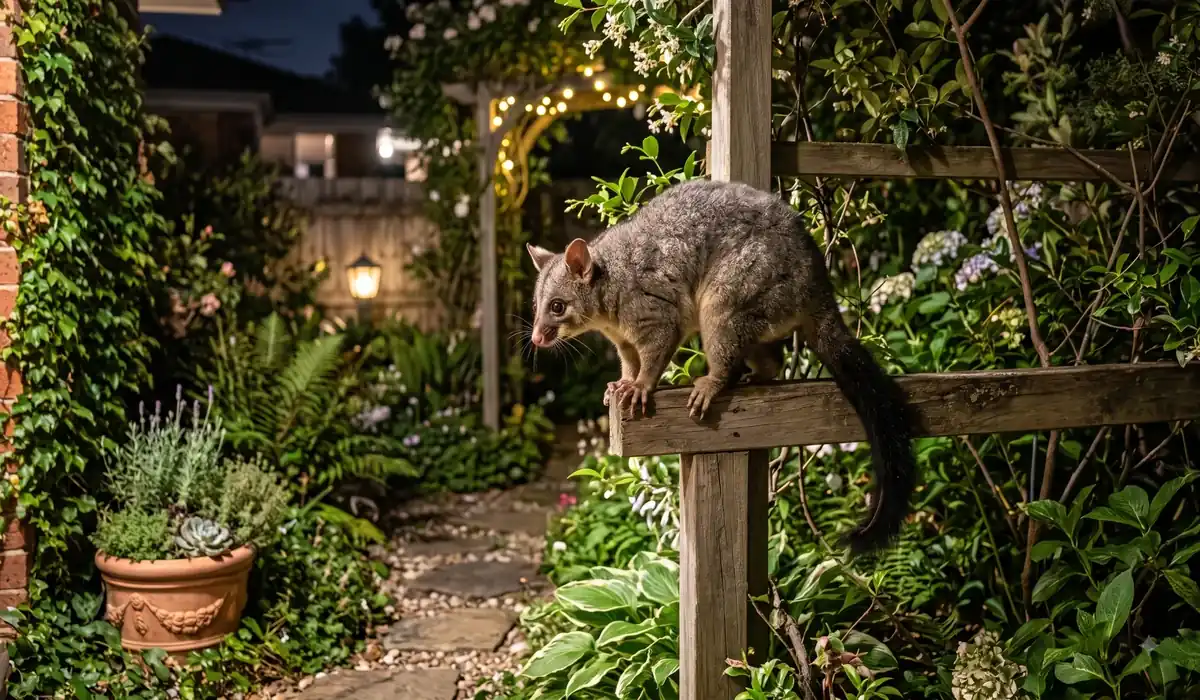
Possums are also highly territorial. The Common Brushtail Possum (Trichosurus vulpecula) maintains a home range of about 2–8 hectares in urban areas, and it will defend that territory aggressively. This is why simply “scaring them away” or using repellents doesn’t work long-term they’re not afraid of your garden, they live there.
Possum activity in your roof typically peaks twice a year in most Australian cities: late autumn to early winter (May–June) as temperatures drop and possums seek warm dens, and September–November during breeding season when juvenile possums are dispersing from their mothers’ territories and looking for new den sites. If your roof has any gaps, these are the months they’ll find them. Do your roof inspection before these windows not after you’ve already heard the thumping.
What Damage Can a Possum Actually Do to Your Home?
People often underestimate how much damage one possum can cause over a few months. Let me break it down practically.
- Insulation degradation: A possum nesting in your roof insulation can compress and contaminate an entire section. Replacing glasswool insulation in a standard three-bedroom home costs $1,500–$3,500 depending on the area and R-value required (Australian Government Energy Rating).
- Electrical fire risk: Chewed wiring is a documented cause of roof fires in Australia. Even a small nick in cable insulation can cause arcing over time. If your possum has been resident for more than a few weeks, an electrician should inspect the roof space wiring.
- Structural timber damage: Possums chew on timber roof beams, particularly if the timber is soft or already slightly degraded by moisture. Over years, this weakens structural elements.
- Ceiling staining: Possum urine soaks through insulation and into the plasterboard ceiling below, creating dark stains and a persistent smell that is very difficult to remove without replacing the affected material.
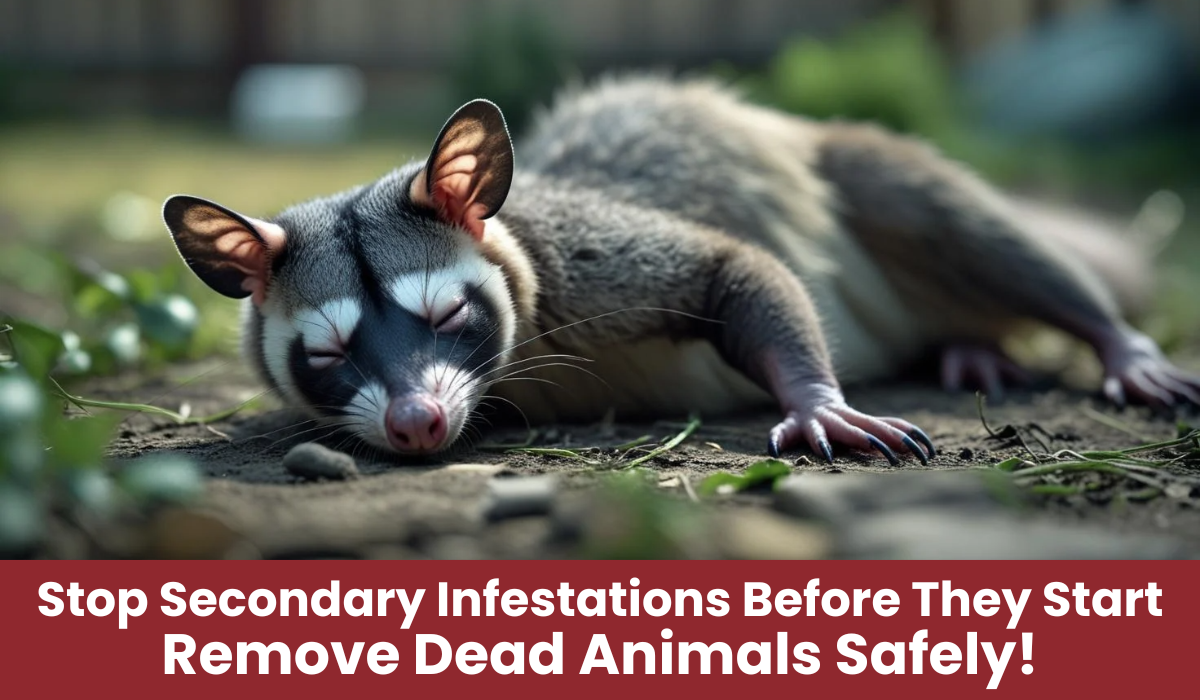
- Secondary pest infestations: A dead possum in your roof is a serious problem. The decomposition attracts blowflies, maggots, and potentially mice or rats that feed on the carcass. Read more in our guide on what to do if a possum dies in your roof.
How Do You Legally Handle a Possum Infestation in Australia?
Right, so you’ve confirmed it’s a possum. Now what? Here’s the actual step-by-step process not the vague “call a professional” advice you’ll get elsewhere.
- Confirm the entry point – Go outside at dusk and watch the roofline. The possum will exit to forage. Note where it comes out. If possible, shine a torch along the roofline during daylight to look for greasy rub marks, debris, or gaps larger than 7cm.
- Do NOT seal the entry point yet – If you block the hole while the possum is inside, it will either die in your roof (triggering a fly/odour problem) or chew a new hole to escape. Wait until you’re certain the animal has left for the night.
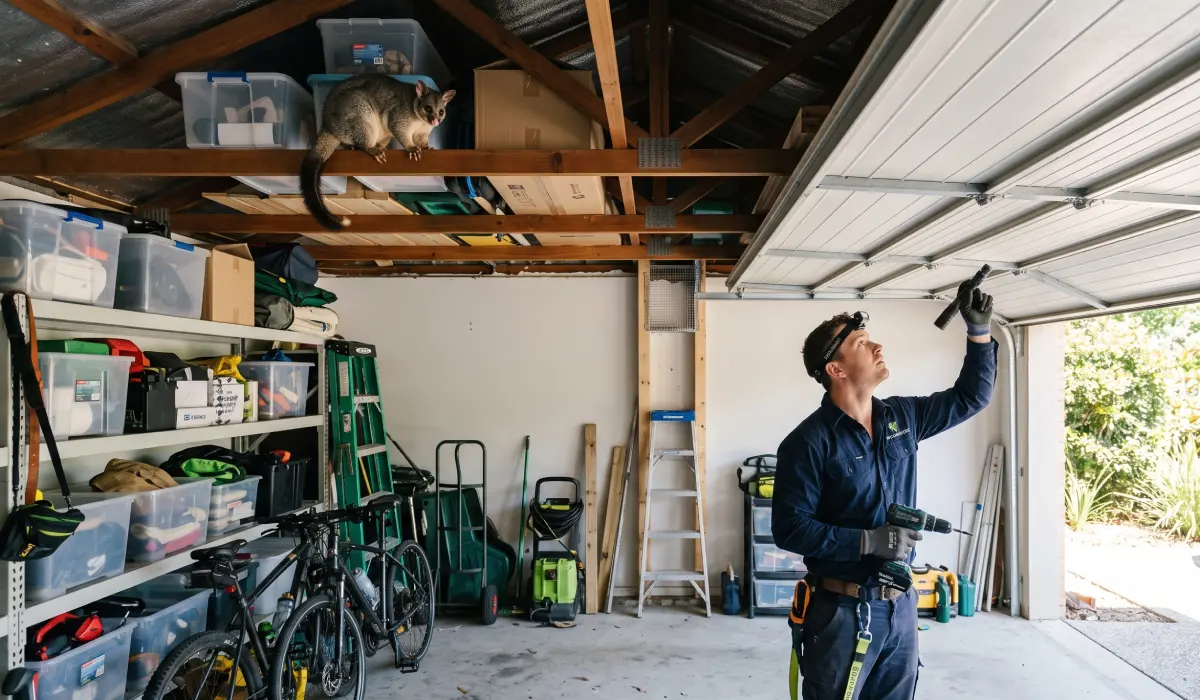
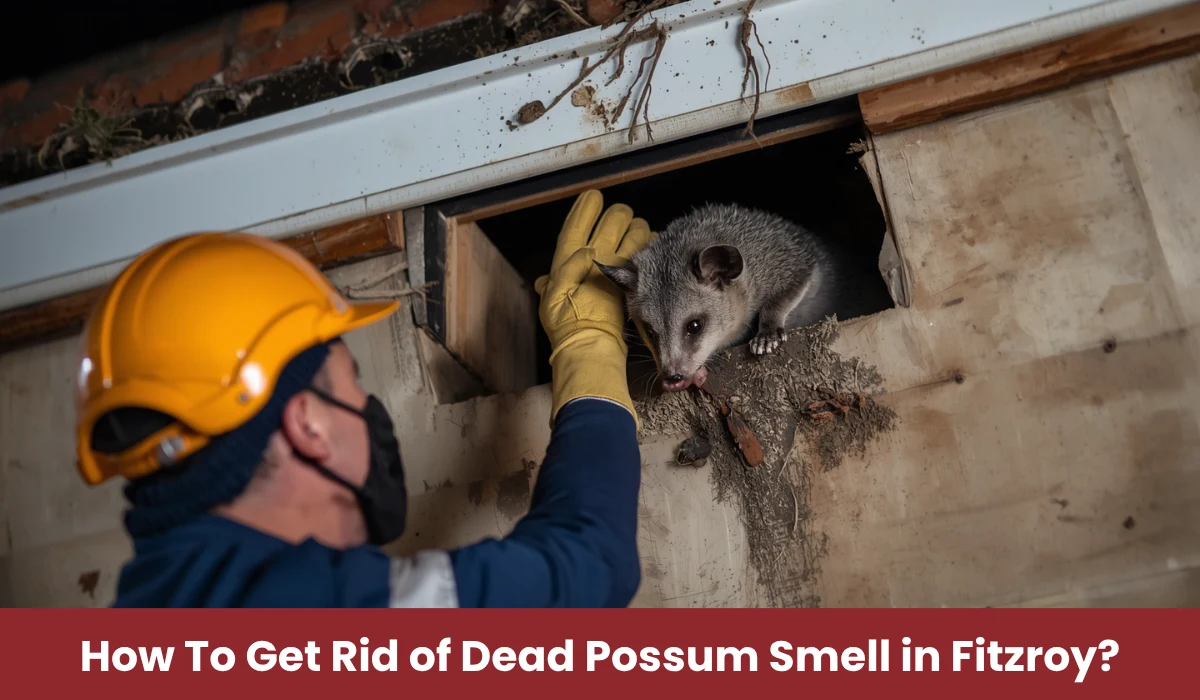
- Install a one-way exit (or have one installed) – This is a cone or flap device that allows the possum to push out but not re-enter. Leave it in place for 2–4 nights to ensure the possum has departed. Your DIY vs. professional possum removal guide covers whether this is something you can do safely yourself.
- Permanently seal the entry point – Use heavy-gauge wire mesh (not foam or plastic – possums chew through those). Ensure there are no other gaps along the roofline, gutters, eaves or fascia boards. A possum that is locked out of its den will actively try every other weak point in your roof.
- Provide an alternative den – This is the step most homeowners skip, and it’s the reason possums sometimes return. Install a possum nest box in a tree or on a tall post at least 4 metres from the ground, ideally near where the possum was entering your roof. Wildlife Victoria has free nest box plans and an installation guide.
- Trim overhanging branches – Any branch within 1 metre of your roofline is a possum superhighway. Trim them back. This is the single most effective long-term prevention measure.
- Remove food sources – Fruit trees, accessible rubbish bins, pet food left outside, and compost bins all attract possums to your property. Netting fruit trees and securing bins won’t make possums disappear, but it removes the incentive for them to treat your garden as a regular feeding ground.
Under state wildlife legislation, you cannot relocate a trapped possum more than 50 metres from its capture site. If you trap a possum and drive it to a park or bushland, you are committing an offence even if your intentions are good. Possums have highly specific territorial knowledge. A possum dropped in an unfamiliar area is very likely to die from stress, starvation, or predation within days. The only legal removal approach is exclusion from your structure, not translocation.
Should You Handle This Yourself or Call a Professional?
Honest answer: it depends on your roof and your confidence level. Installing a one-way exit device and sealing a single entry point is something a competent DIYer can do safely. The challenge is that possums often use secondary entry points you haven’t found yet and a professional inspection will find them all in one go.
Where professional help is non-negotiable:
- You can smell ammonia coming through the ceiling – the contamination needs to be properly assessed and the insulation may need replacing
- You’ve found chewed cables – an electrician and pest controller need to coordinate the inspection
- You have a multi-storey home, metal roof, or unusual roof access – working at height with slippery surfaces is serious risk without the right equipment
- There are multiple entry points – one-way exits need to be on every possible exit so the possum doesn’t just relocate internally
- A possum may have died in the roof – this needs professional assessment and potentially insulation removal. Read our detailed guide on what to do if a possum dies in your roof.
For a full breakdown of costs and what’s included, see our guide on how much possum removal costs in Australia.
How Do You Stop Possums From Coming Back?
Getting a possum out is the first step. Keeping it out is the second and harder part. Here’s the prevention checklist I give every client after a job:
- Inspect the roofline twice a year – March and September are the best times, just before peak possum seasons. Look for any gaps over 5cm, broken tiles, loose guttering, or open weep holes.
- Keep branches 1+ metre from your roof – This is the most impactful prevention measure and it costs nothing but a bit of annual pruning.
- Secure all roof vents with heavy-gauge mesh – Use 13mm (½ inch) hardware cloth (galvanised steel wire mesh). Possums can compress their bodies considerably to push through larger gaps.
- Install possum nest boxes – Two boxes per property significantly reduces the chance of a possum trying your roof. Place them 4–5 metres up in a tree or on a tall post facing north-east for morning warmth.
- Check after major storms – Heavy rain and wind regularly dislodge tiles and damage eaves, creating new entry points overnight.
- Secure rubbish bins and remove fallen fruit promptly – Possums that regularly feed on your property are far more likely to try to nest there too.
- Install motion-sensor lighting near the roofline – Not foolproof, but possums dislike sudden bright light and may choose less exposed properties over time.
Heard Thumping in Your Roof Last Night?
Our skilled pest controllers service Melbourne, Sydney, Brisbane, Perth, Adelaide, Hobart, and Canberra. We identify all entry points, install one-way exits, and fully seal your roof all in compliance with Australian wildlife law.
the possum recognises there’s no actual threat and resumes normal behaviour. Repellents work best as a deterrent for possums that haven’t yet chosen your roof not for ones already living there.
Frequently Asked Questions
Ans. Commercial possum repellents including quassia chips, camphor, blood and bone, and ultrasonic devices have very limited effectiveness for roof-dwelling possums. Here’s why: a possum that has established a den in your roof has already habituated to your property. It knows the smell of your garden, your shed, your bins. Adding an unfamiliar scent nearby creates a brief deterrence, but within a few days the possum recognises there’s no actual threat and resumes normal behaviour. Repellents work best as a deterrent for possums that haven’t yet chosen your roof not for ones already living there.
Ans. The actual exclusion process from installing a one-way exit to permanently sealing the entry point typically takes 3–5 nights. The possum needs at least 2 full nights to exit and confirm it can’t get back in before you seal permanently. The full job including proofing and any repair work usually takes 1–3 days of tradesperson time. Delays happen when there are multiple unknown entry points or when the possum has dependant young (joeys) in that case, the process is managed more carefully to avoid separating a mother from her joey.
Ans. This is a complication that many pest controllers don’t advertise upfront. Common Brushtail Possums can have young in the pouch year-round, though births peak in autumn and spring. If a possum in your roof has a joey in the pouch, any exclusion must be done carefully blocking the mother out while a joey is still in the roof leaves the joey to die, which creates serious odour and fly problems. A experienced wildlife controller will delay exclusion, or use a monitored approach, until the joey is old enough to travel with the mother. Wildlife carers like WIRES (NSW) or Wildlife Victoria can assess the joey’s developmental stage if needed.
Ans. This varies significantly between insurers and policies. Most standard home insurance policies in Australia do not cover pest removal costs as a routine service. However, damage caused by the possum such as chewed wiring, damaged insulation, or stained ceilings may be claimable depending on your policy wording. Always check whether your policy covers “gradual damage” (usually excluded) versus “sudden and accidental damage.” It’s worth calling your insurer before any work is done to confirm what documentation they’d need if you were to make a claim for repairs.
Ans. The two species you’re most likely dealing with are the Common Brushtail Possum (Trichosurus vulpecula) and the Common Ringtail Possum (Pseudocheirus peregrinus). Brushtails are larger (1.5–4kg), more solitary, and tend to use roof cavities as primary dens. Ringtails are smaller (0.7–1.1kg), often travel in family groups, and more commonly nest in dreys (leaf nests) in dense shrubs though they’ll use roof spaces too. Brushtails make more noise and cause more damage due to their larger size. In tropical Queensland and the NT, the Short-eared Brushtail and various other species are also encountered.
Does It Matter Which City You’re In?
Yes, both the species you’re likely dealing with and the legal requirements vary by state. Here’s a quick reference:
- Melbourne: Brushtail possums are very common in leafy inner suburbs like Hawthorn, Kew, Camberwell and Northcote. Victorian law requires that trapped possums be released within 50 metres of capture and ideally at the point of entry. Melbourne pest control services.
- Sydney: Both Brushtail and Ringtail possums are widespread across the north shore, inner west, and eastern suburbs. Sydney’s older Federation-style homes are particularly vulnerable due to deteriorating eaves. Sydney pest control services.
- Brisbane: Queensland’s warmer climate means year-round possum activity with less seasonal variation. Brushtail possums are extremely common in suburban backyards. Brisbane pest control services.
- Perth: Ringtail possums are the dominant species in Perth’s suburbs. They’re smaller and quieter than Brushtails, making them harder to detect early. Perth pest control services.
- Adelaide: Common Brushtail possums are widespread. Adelaide’s period homes and stone cottages often have multiple potential entry points that need systematic checking. Adelaide pest control services.
The Bottom Line
If you’ve ticked off two or more of the signs on this page, you almost certainly have a possum in your roof. The good news is that it’s a manageable problem. The bad news is that the damage accumulates quickly and the legal requirements mean you can’t just set a trap and be done with it.
The single most important thing you can do right now before calling anyone is to go outside at dusk and watch your roofline. Find the entry point. Everything else flows from there.
If you’d rather have someone else handle the whole thing the inspection, the exclusion, the proofing, and the repairs that’s what we’re here for. True Pest Control operates across all major Australian cities, and our possum jobs comply fully with state wildlife legislation.
Ready to Get Your Roof Back?
Same-day service available across Melbourne, Sydney, Brisbane, Perth, Adelaide, Hobart and Canberra.