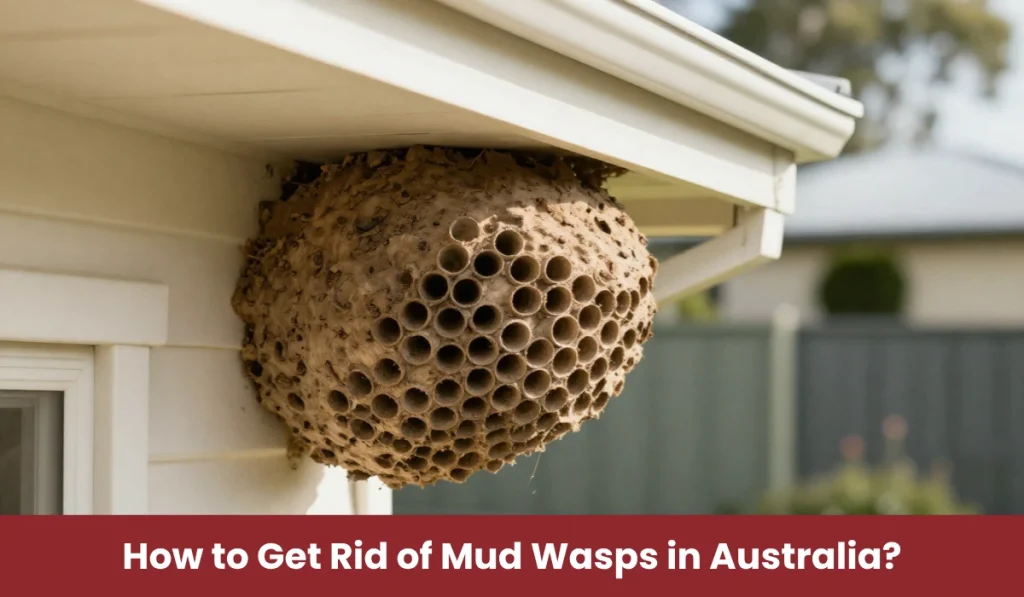
You spot it first out of the corner of your eye – a lumpy, dried-clay smear stuck under your patio eaves that looks like someone flicked mud at the wall and it just… stayed. It’s not dirt. It’s a nursery, built cell by cell by a solitary female wasp who’s been ferrying mouthfuls of wet mud back and forth for days, and inside it, paralysed spiders are waiting to become breakfast for her larvae.
That’s the strange, slightly unsettling reality of mud wasps in Australia. They’re not the aggressive backyard menace paper wasps or European wasps can be, but a cluster of their nests along your gutter line, window frames, or garage roller door is still enough to make most homeowners want them gone. If you’re wondering how to get rid of mud wasps without getting stung or damaging your home, this guide walks you through identification, safe removal, and prevention – the same process our technicians use on real Australian properties.
What Are Mud Wasps, Exactly?
“Mud wasp” is really an umbrella term Australians use for several unrelated species – mud daubers (Sceliphron), potter wasps (Delta and Abispa), and a few smaller mud-nesting relatives. They’re not hornets, despite the nickname; true hornets don’t exist in Australia at all.
A few identifying features to look for:
- Size: Roughly 1–3 cm long, with a distinctive “thread-waisted” body – a slim, almost pinched connection between the thorax and abdomen.
- Colour: Usually black with yellow, orange, or rust-coloured markings.
- Nest shape: Hard, dried-mud lumps or tube-like cells, often stacked or fused together, ranging from golf-ball to fist-sized.
- Location: Eaves, window frames, garden sheds, roller doors, outdoor furniture, and inside wall cavities or roof voids if they can find a gap.
Unlike paper wasps, mud wasps are solitary – there’s no queen, no colony, and no coordinated defence of the nest. Each female builds and provisions her own mud cells alone.
Are Mud Wasps Dangerous?
Here’s some good news: mud wasps are among the least aggressive stinging insects you’ll encounter in Australia. They don’t swarm, they don’t guard their nests the way social wasps do, and most species will only sting if they’re grabbed, trapped, or handled directly.
That said, a sting still hurts, and anyone with a known wasp allergy should treat every nest with caution. The bigger practical issue is usually cosmetic and structural – mud nests stain brickwork and timber, clog weep holes and window tracks, and once vacated, often get taken over by other pests, including spiders and resin bees.
Why Are Mud Wasps Building Nests on Your Property?
Mud wasps need two things to set up shop: a source of wet mud (garden beds, puddles, dripping taps, pot plant saucers) and a sheltered ledge to build on. Homes with north-facing eaves, exposed brick, and a nearby water source are prime real estate. Removing the water supply is often just as important as removing the nest itself – more on that below.
Safety Precautions Before You Start
Even low-risk pests deserve a sensible approach. Before attempting DIY mud wasp removal:
- Choose your timing: Early morning or dusk, when the wasp is less likely to be actively provisioning the nest.
- Cover up: Long sleeves, gloves, and eye protection reduce your chance of a sting if the wasp is still home.
- Check for occupants first: Old, pale-grey, crumbling nests are usually vacated. Fresh nests with a smoother, darker mud finish are more likely to be active.
- Keep kids and pets clear of the work area until you’ve confirmed the nest is empty and removed.
DIY Methods to Remove Mud Wasp Nests
1. Scrape and Remove (Best for Vacated Nests)
If the nest looks old and there’s no wasp activity, a putty knife, paint scraper, or even a stiff-bristled brush is often all you need. Scrape the nest away from the surface, seal it in a bag, and dispose of it. This is the simplest and safest method when timed correctly.
2. Wasp-Specific Insecticide Spray
For nests you suspect are still active:
- Use a commercial wasp spray labelled for mud dauber or potter wasp control.
- Spray directly onto the nest entrance from a safe distance, following the product’s label instructions.
- Leave the area and wait at least 24 hours before scraping the nest away.
3. Soapy Water Solution
A DIY favourite for a reason – mixing dish soap with water in a spray bottle creates a low-tox option that breaks down a wasp’s outer waxy layer on contact. It’s gentler on surrounding plants than commercial sprays, though it may take a couple of applications on larger or multi-cell nests.
4. Prevent Rebuilding on the Spot
Mud wasps are creatures of habit and will often rebuild in exactly the same spot. Once the old nest is gone, wipe the area down and consider a light coating of a wasp-deterrent product so the bare patch doesn’t become a repeat address.
Side note: DIY removal works well for isolated nests in easy-to-reach spots. If you’re dealing with multiple nests, a nest inside a wall cavity, or a ladder job at height, it’s a sign to bring in professional help.
When to Call a Professional Wasp Exterminator?
Some situations are better left to skilled technicians:
- Nests in hard-to-reach or high locations, where a ladder job adds unnecessary risk.
- Multiple nests across the property, suggesting an ongoing attraction issue that needs a broader fix.
- Nests inside wall cavities, roof voids, or near electrical fittings, where removal without proper equipment can cause damage.
- Known wasp sting allergies in the household.
A professional pest control team can identify the exact species, treat active nests safely, and – importantly – address why the wasps chose your property in the first place, which DIY spot-treatment often misses. If you’re weighing up whether it’s worth the call-out, our breakdown of DIY vs professional pest control is a useful starting point.
Preventing Mud Wasps From Coming Back
Once your property is clear, a few habits go a long way:
- Cut off the water supply: Fix dripping taps, empty pot plant saucers, and avoid letting water pool near the house.
- Seal gaps and crevices: Check eaves, weep holes, and window frames for entry points and seal them where practical.
- Inspect seasonally: Spring and summer are peak mud wasp building months in most Australian states – a quick eaves check every few weeks catches new nests early.
- Keep garden beds tidy: Reducing exposed damp soil near the home makes it a less convenient mud source.
These same habits also help keep paper wasp nests and general wasp nests from moving in, since most stinging insects are drawn to the same combination of shelter and moisture.
Mud Wasps vs Other Backyard Stingers
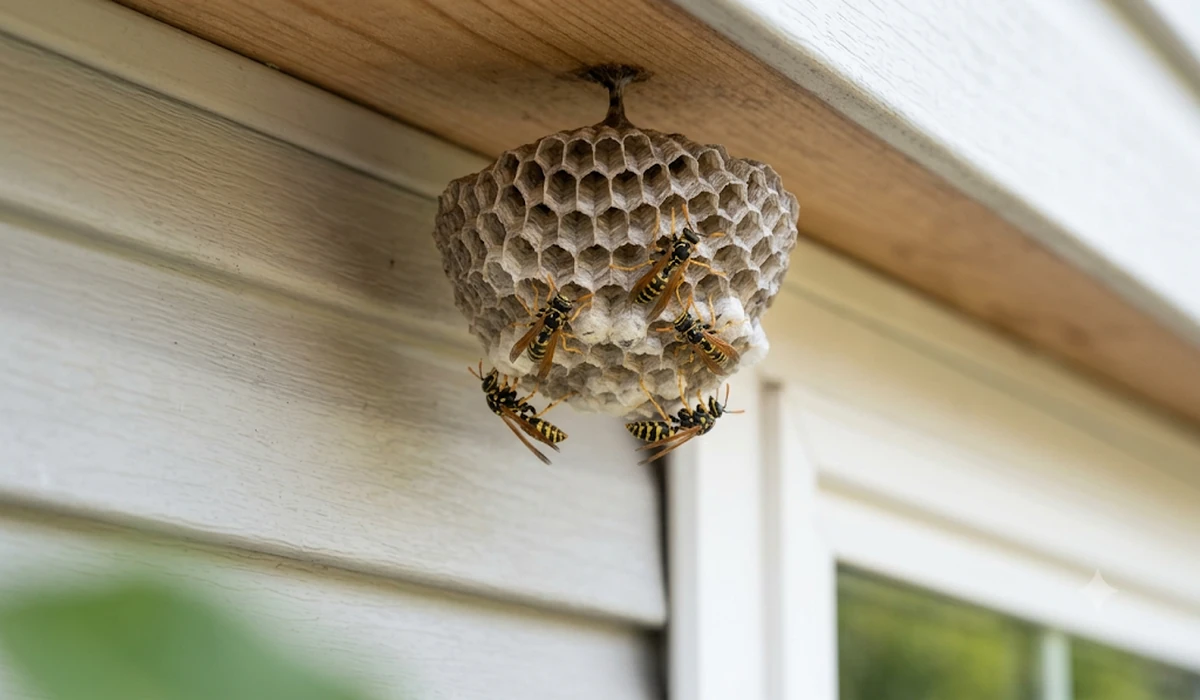
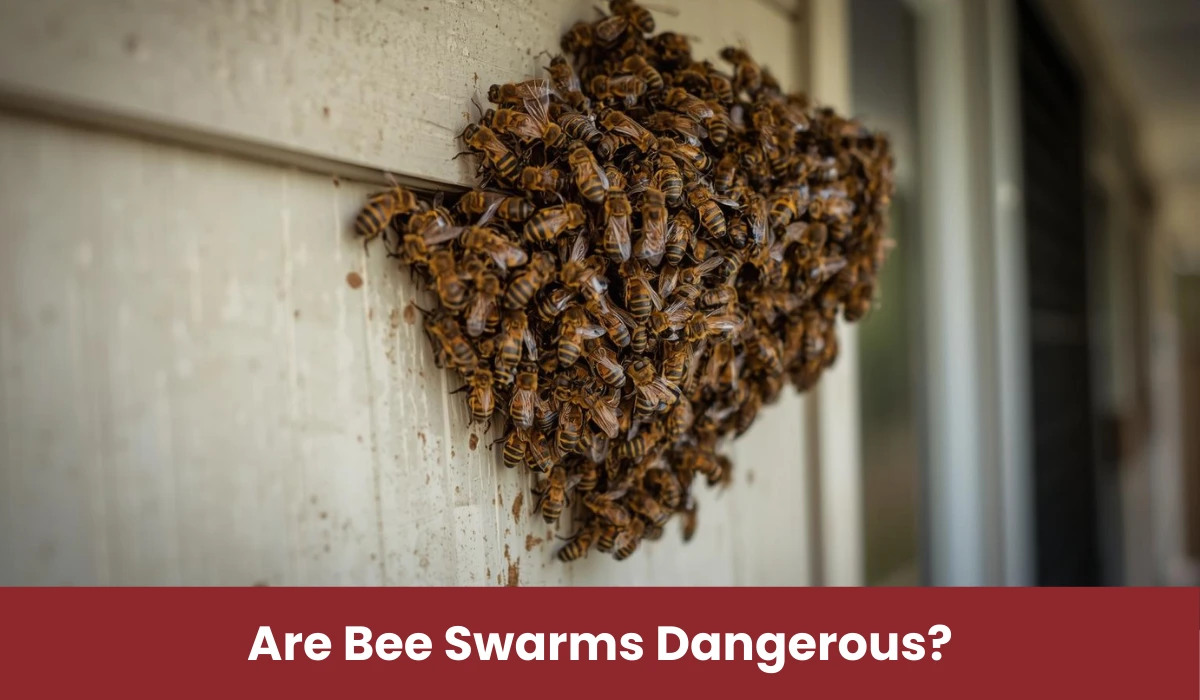
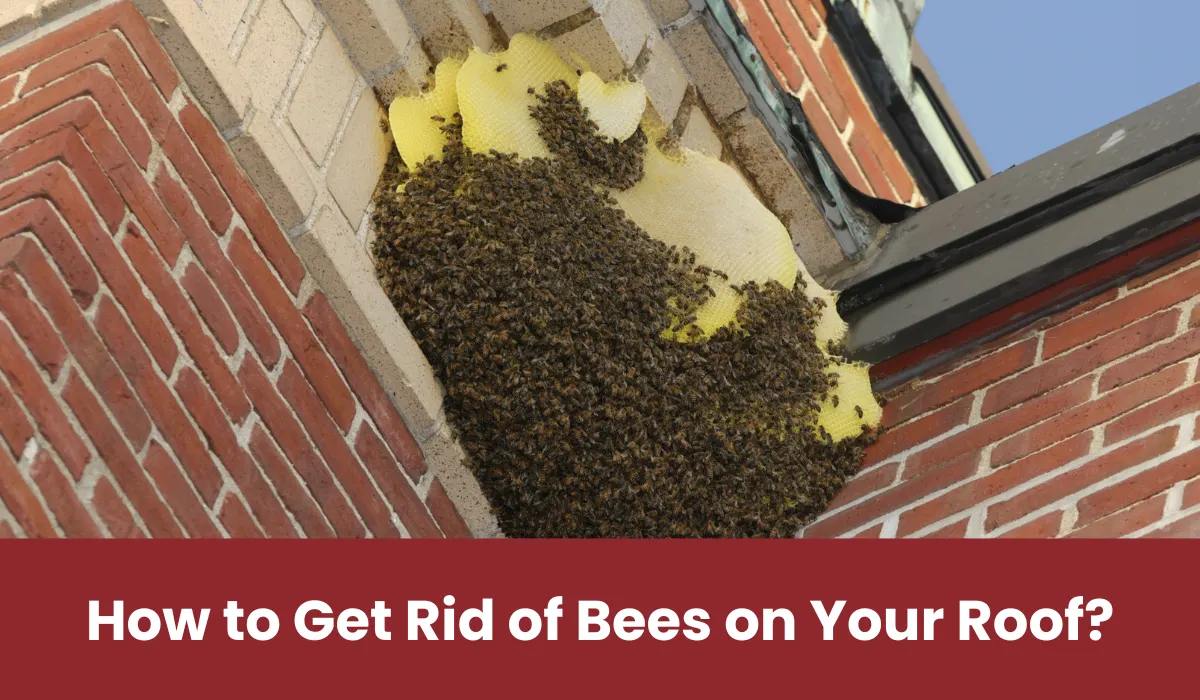
It’s easy to lump every buzzing insect together, but treatment differs by species. If what you’re looking at is more of a papery, umbrella-shaped nest rather than hardened mud, you’re likely dealing with a paper wasp instead. Seeing a cluster of insects on the move rather than a fixed nest could point to a swarm of bees, which needs a very different, non-lethal approach. And if the activity is concentrated up near the roofline, our guide on bees on your roof covers that scenario specifically. Getting the identification right the first time saves you from using the wrong method entirely.
Legal and Environmental Considerations
Mud wasps play a genuinely useful role in the garden – most species prey on spiders or caterpillars, helping keep those populations in check. Where a nest isn’t posing a direct risk (away from doorways, play areas, or high-traffic zones), leaving it be is a perfectly reasonable option. When removal is necessary, choosing eco-conscious methods, like the soapy water approach above, limits the impact on surrounding wildlife. For more on this, see our piece on whether eco-friendly pest control methods actually hold up.
Key Takeaways
- Mud wasps are solitary and low-aggression – most stings happen only when the nest is handled directly.
- Identification matters: hardened mud nests mean mud wasps; papery umbrella nests mean paper wasps; a moving cluster means bees.
- Timing and technique (early morning/dusk, soapy water or wasp spray, protective gear) make DIY removal manageable for accessible, single nests.
- Water sources near the home are the biggest driver of repeat nesting – cut off the supply, and you cut off the problem.
- Height, multiple nests, or wall-cavity nests are the clearest signals to call in a professional.
Frequently Asked Questions
Ques 1. Do mud wasps sting people?
Ans. Yes, but rarely without provocation. Mud wasps are solitary and don’t defend their nests aggressively the way social wasps do. Most stings occur when a nest is handled directly, or a wasp is trapped against skin or clothing. The sting can still be painful, so caution is worthwhile, especially for anyone with a known allergy.
Ques 2. How do I know if a mud wasp nest is still active?
Ans. Active nests typically have a smoother, darker, freshly built appearance, and you may spot the wasp coming and going. Older, vacated nests look pale, dry, and often start to crumble or flake at the edges. Watching from a safe distance for 10–15 minutes on a warm day usually confirms activity levels.
Ques 3. Can I just leave a mud wasp nest alone?
Ans. In many cases, yes. If the nest is out of the way of doors, windows, and outdoor living areas, mud wasps generally cause little disruption and even help control garden pests like spiders. Removal becomes more important when nests sit near high-traffic areas or start multiplying across the property.
Ques 4. What’s the difference between a mud wasp and a paper wasp nest?
Ans. Mud wasp nests are hardened, dried mud structures, often lumpy or tube-shaped. Paper wasp nests have an open, umbrella-like shape made from a papery material, with visible hexagonal cells. The two require different removal approaches, so correct identification matters before you start.
Ques 5. Will soap and water really kill a mud wasp?
Ans. Yes – a mixed solution of dish soap and water breaks down the waxy coating on a wasp’s exoskeleton, which affects its ability to breathe and move. It’s a low-cost, lower-toxicity option compared to commercial insecticides, though larger or multi-cell nests may need more than one application.
Ques 6. Are mud wasps attracted to certain colours or scents?
Ans. Not particularly – unlike bees, mud wasps aren’t strongly drawn to floral scents or bright colours. Their main attractants are a nearby mud or water source and a sheltered ledge to build on, which is why prevention focuses on water control rather than scent-based deterrents.
Ques 7. How long does it take a mud wasp to build a nest?
Ans. Depending on the species and nest size, construction can take anywhere from a few days to a couple of weeks, with the female making repeated trips to gather mud. Larger, multi-celled nests built by species like Abispa ephippium can be added to over successive seasons.
Ques 8. Is it worth calling a professional for just one small nest?
Ans. For a single, easily reached nest, DIY removal is usually enough. It’s worth calling a professional when nests are at height, inside a wall or roof cavity, multiplying across the property, or if anyone in the household has a wasp allergy – situations where the risk outweighs the DIY savings.
Conclusion
Mud wasps aren’t the villains of the Australian backyard – most are solitary, low-aggression, and even doing you a favour by keeping spider numbers down. But a property covered in dried mud nests, or a nest in a spot your family uses daily, is a fair reason to take action. With the right timing, a bit of protective gear, and a plan to cut off their water supply, most mud wasp problems are manageable without professional help.
If the nests keep coming back, they’re out of reach, or you’d simply rather hand it to someone who does this every day, True Pest Control offers safe, effective wasp nest removal across Australia. Call us on 0480 022 718 for expert help getting your property wasp-free.